
Why Migraine Isn't Just a Headache
By Dr. Brenna Erickson, DC ┃ The Migraine Whisperer 📖 Reading Time: 9 minutes
IN THIS POST:
I have opinions about the phrase "just take an Advil." Strong ones. If you've been on the receiving end of that suggestion mid-migraine, you already know the specific flavor of rage I'm talking about.
It bugs me, and it's not just because it's unhelpful — it's because it completely misunderstands what's actually happening in your head. So let's fix that, because once this clicks, a lot of what I talk about on this blog is going to make a lot more sense.
Why don't you always drive your car at 150mph? You would burn out your engine if you did. The amount of fuel used would be excessive. It does damage every time it is done. Your body runs on the same logic. Picture an RPM gauge, needle climbing toward redline — there's a part of your brain quietly making sure yours stays in a safe range all day, so you don't burn out.
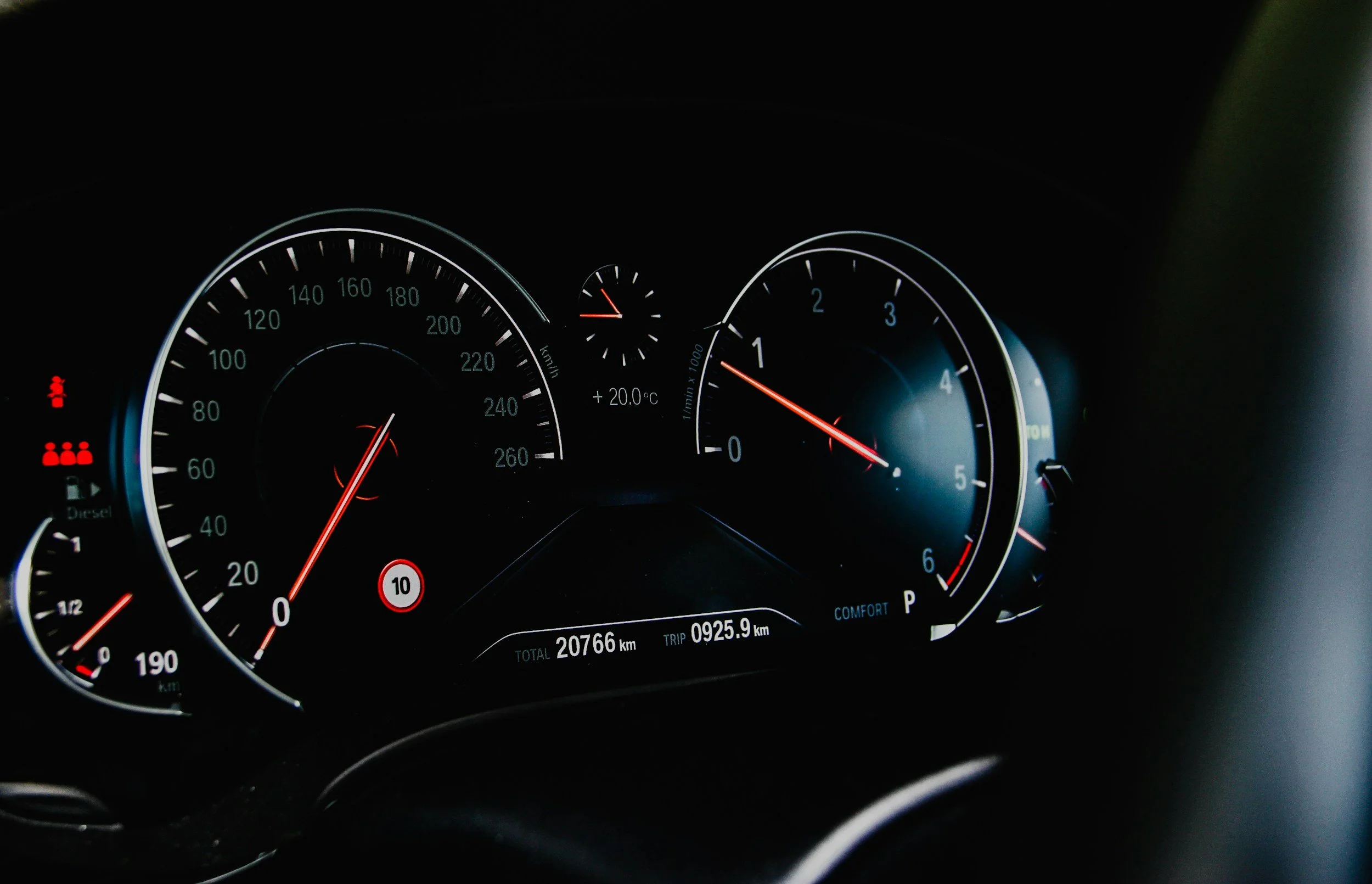
a close-up of a car's RPM gauge
That part is a small structure called the hypothalamus. Its whole job is keeping you at a sustainable cruising speed: regulating your temperature, hunger, sleep, hormones, and stress response, constantly making tiny adjustments so you're not running hot.
This is Where Migraine Begins
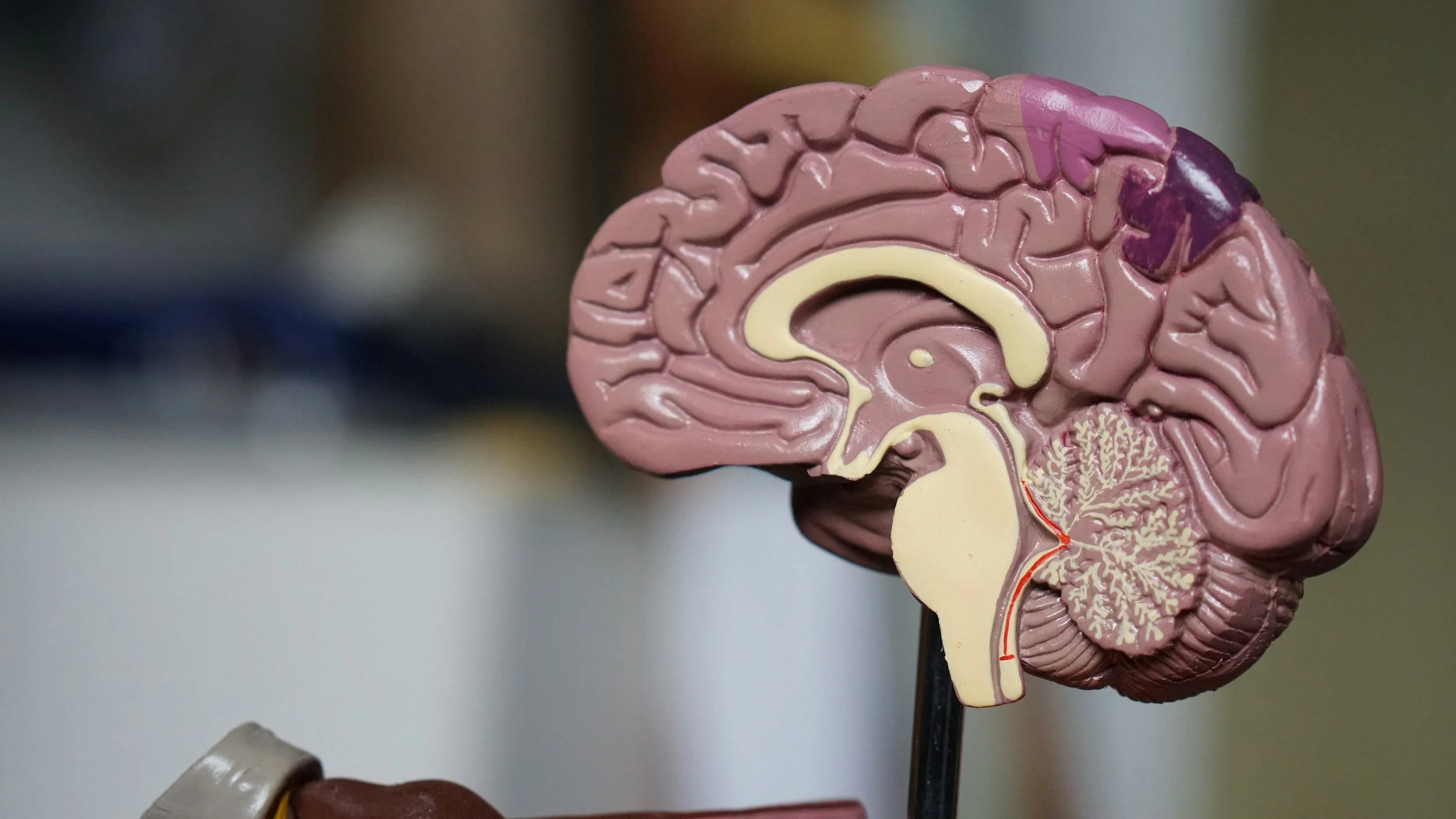
a classroom model of a brain, split in half
Migraine tends to run in families, and this isn't just something people say anecdotally. Twin and family studies going back to the 1990s have put the heritability of migraine somewhere between 30% - 60 %, and one review published in The Journal of Headache and Pain in 2023 put the more recent estimate closer to 42%. If you have a first-degree relative — a parent, a sibling — with migraine, your own risk is measurably elevated compared to someone with no family history. A genetics review published in a major neurology journal in 2024 documented specific changes in the activity and connectivity of the hypothalamus and brain stem in migraine brains — the exact structure I just described as your engine's regulator. This is one of the more consistent findings in migraine neuroscience: the hypothalamus itself appears to be involved from the very earliest stages of an attack, sometimes hours before any pain begins, which is part of why some people get warning signs — fatigue, food cravings, mood shifts — well before the headache phase starts.
What this means practically: things that wouldn't even register for someone else — a skipped meal, one bad night of sleep, a rough week — can push your needle toward the red zone a lot faster, because the regulator itself is doing its job from a different baseline.
I want to be clear about this, because I think a lot of you have carried this for years: it's not a personality flaw. It's not "you're just too sensitive to stress." It's inherited, the same way your eye color is. You didn't choose it, and no amount of trying harder change undo it. I say this as someone who's watched patient after patient blame themselves for something they never had control over to begin with. I ask about family history in my intake paperwork, becuase it matters.
The answer is almost always some version of the same thing: "well, my mom got headaches, but nobody ever called them migraines." Or a grandmother who "just had to lie down sometimes." The heritability was there. Nobody had the word for it, so it got filed away as a personality trait instead of a pattern.
What "Genetic" Doesn't Mean
I want to head off a fear I hear constantly, because I think it's sitting underneath a lot of the shame: "genetic" doesn't mean "fixed" or "hopeless."
Migraine genetics are polygenic — one genome-wide analysis identified more than 180 gene variants associated with migraine risk, each contributing a small piece, interacting with each other and with your environment. There's no single "migraine gene" flipping a switch. Your genetics set a range of susceptibility. What happens inside that range — how often, how severe, how disruptive — still has enormous room to move.
We'll get into exactly what that means for you specifically soon.
So What Happens When the Engine Actually Redlines?
You have probably experienced “limp mode” — when your car's computer senses something's wrong and deliberately caps your speed at 30mph, because it would rather protect the engine than let you keep driving it hard. It freaked me out the first time it happened to me. In your brain, that signal travels through your trigeminal nerve and releases a chemical called CGRP, which is really the chemical producing the pain itself. It's not your brain malfunctioning. It's your brain protecting you, badly, in the only language it has.
Some of the newest migraine medications target CGRP directly now, instead of just numbing pain generally. Worth knowing, if nobody's mentioned it to you yet. These types of medications only work for migraine, not all headaches.

a firefighter sprays fire retardant onto a car engulfed in flames
This is exactly why "just take an Advil" falls flat. Advil dims the warning light. It does nothing about why the engine was running hot enough to throw a warning light in the first place.
Signs Your Engine Is Already Running Hot
Because the hypothalamus is involved so early, a lot of people notice something shifting well before the pain starts, even if they've never connected the dots. Unusual fatigue that doesn't match your sleep. Food cravings that seem to come out of nowhere. Neck stiffness. A mood shift — unusually irritable, or strangely low. Yawning more than usual. Words feeling slightly harder to find.
None of these are "just having a bad day." They can be your engine telling you it's already running hotter than it should, hours before the redline moment actually arrives. Learning to recognize your own version of this is one of the most useful things you can do — it's the difference between catching a prodrome (the pre-game phase of a migraine attack) and being blindsided by it.
I hear a version of the same story constantly: someone tells me the migraine "came out of nowhere," and then, once we actually map their prior 24 hours together, it turns out that it didn't. There was the skipped lunch. The three hours less sleep than usual. The argument that lingered longer than it should have. None of those things individually felt like a big deal in the moment — which is exactly why they're so easy to miss. The engine doesn't send a formal notice via certified mail. It just runs a little hotter, quietly, until it can’t anymore.
If you want a few concrete things to reach for the moment you notice one of these signs, that's exactly what the "Oh Sheet" Migraine Emergency Kit is for — 5 interventions you can use the moment you feel an attack starting. And yes, it’s free.
What This Means for Your Next Appointment
If this is the first time you've heard your migraine explained this way, it's worth bringing into your next conversation with a provider — whether that's your PCP, a neurologist, or someone like me. A few things worth mentioning specifically:
You'd be in good company if you've never actually gotten a formal diagnosis. Roughly 40% -50% of people with migraine are undiagnosed, and one large US survey found that nearly 1/3 of people having 4 or more migraine days a month had never been diagnosed at all. Older research found similar gaps by gender — only about 41% of women and 29% of men who met the clinical criteria for migraine reported ever being diagnosed by a physician. If you've spent years calling this "just a bad headache," you're not an outlier. You're the norm the research keeps finding.
Your family history, and not just "does anyone else get headaches" but "does anyone else get migraines" — the distinction matters, since it's the actual data heritability studies were built on. Whether you experience premonitory symptoms, and roughly how far in advance of an attack they tend to show up — that timeline is genuinely useful diagnostic information, not just interesting trivia.
This isn't about walking in with a diagnosis already decided. It's about giving your provider a fuller picture than "I get bad headaches sometimes." I hear more often than I'd like from people who've been managing full-blown migraine for years without ever using the actual word for it.
Why Does It Run Hot?
The answer: it depends. And it’s almost never just one thing. Usually it's a combination of your nervous system, your gut, your hormones, your thyroid, your sleep, your nutrient levels, all nudging the temperature up a little at a time. That's a lot of inputs, but it's also the good news: there's no single narrow fix. Addressing any one of them takes pressure off the whole system.
That's what I focus on here on this blog. Nervous system, nutrition, hormones, thyroid, the whole map — one input at a time, so you eventually understand your own engine instead of white-knuckling through the next limp-mode moment and wondering what you did wrong.
You didn't do anything wrong.

a woman fills a teacup from a clear glass tea pot at a warm wooden kitchen table.
I'd genuinely love to hear from you — hit reply, or find me on Instagram @migrainewhisperer, and tell me: does any of this land for you? What's your version of "just take an Advil" that you're tired of hearing?
If the trigger you've been avoiding hasn't actually stopped the migraines, there's a reason for that too — read Why Traditional Migraine Approaches Fail (And What to Do Instead)
Understanding your own mechanism doesn't make the next attack painless. Nothing in this post is a cure, and I'd be lying if I told you otherwise. But it changes what you're doing in between attacks. Instead of waiting for the next one and hoping this time is different, you're watching for your own early signs, working with your care team on the inputs that actually matter for you, and building a fuller picture than "this happens to me sometimes."
You didn't do anything to cause this. You don't have to figure it out alone, either.
— Dr. Brenna Erickson DC, The Migraine Whisperer

The Migraine Whisperer is Dr. Brenna Erickson's practice focused on helping people with chronic and complex migraine build the conditions for real, lasting neurological resilience. She practices at Stockheart Whole Health in Minneapolis and works with clients online through the Migraine Resilience Academy.
SHARE THIS POST:
💚 Know someone who's been told "it's just a headache" one too many times? Send them this.
📌 Save it — the mechanism explained here is the foundation for everything else on this blog.
💬 Leave a comment: what's your version of "just take an Advil" that you're tired of hearing?
