
Wildfire Smoke and Migraine: The Connection (And What to Do About It)
By Dr. Brenna Erickson, DC ┃ The Migraine Whisperer 📖 Reading Time: 12 minutes
IN THIS POST:
I had hoped that I wouldn’t have to write this post. But here we are. Increasing frequency of wildfires north of us has made smoky, hazy summers more and more frequent. This year is no exception. Wildfire smoke drifitng over the Twin Cities was unthinkable 10 years ago, but now it seems to be a yearly occurence. It disrupts outdoor activites, camping trips, and leaves everyone huddled inside feeling generally anxious. I’m no exception to this and I have lived through wildfire season out in California during some of the very worst years. So I have compiled your essential guide to gathering tools, equipment, and strategies for minimizing your exposure to wildfire smoke.
Unless you have been living under a rock in Minnesota this week, you already know. I watched the wall of smoke roll in over the city yesterday looking like a weird thunderstoom coming in. The sky has that flat, hazy, sepia look to it. Your eyes sting before you've even made it to the car. And if you're one of my migraine people, there's a decent chance your head has been quietly screaming since Tuesday.
Air quality is sitting in the "maroon" category — hazardous for everyone, not just high-risk groups — across a big chunk of the state right now. Smoke from the Arrowhead fires, the Boundary Waters, and southern Canada has been pouring south for days, and it landed right on top of a heat wave, which makes everything worse. Your body isn't built to metabolize two stressors that size at once. It's not supposed to feel easy right now. It isn't easy right now for anyone.
So let's get into what's actually happening in a migraine brain during a smoke event, what to do about it today, and — because I never want to leave you with a problem and no plan — where the line is between what you can control this week and what you can't.
Why Smoke Hits a Migraine Brain Differently
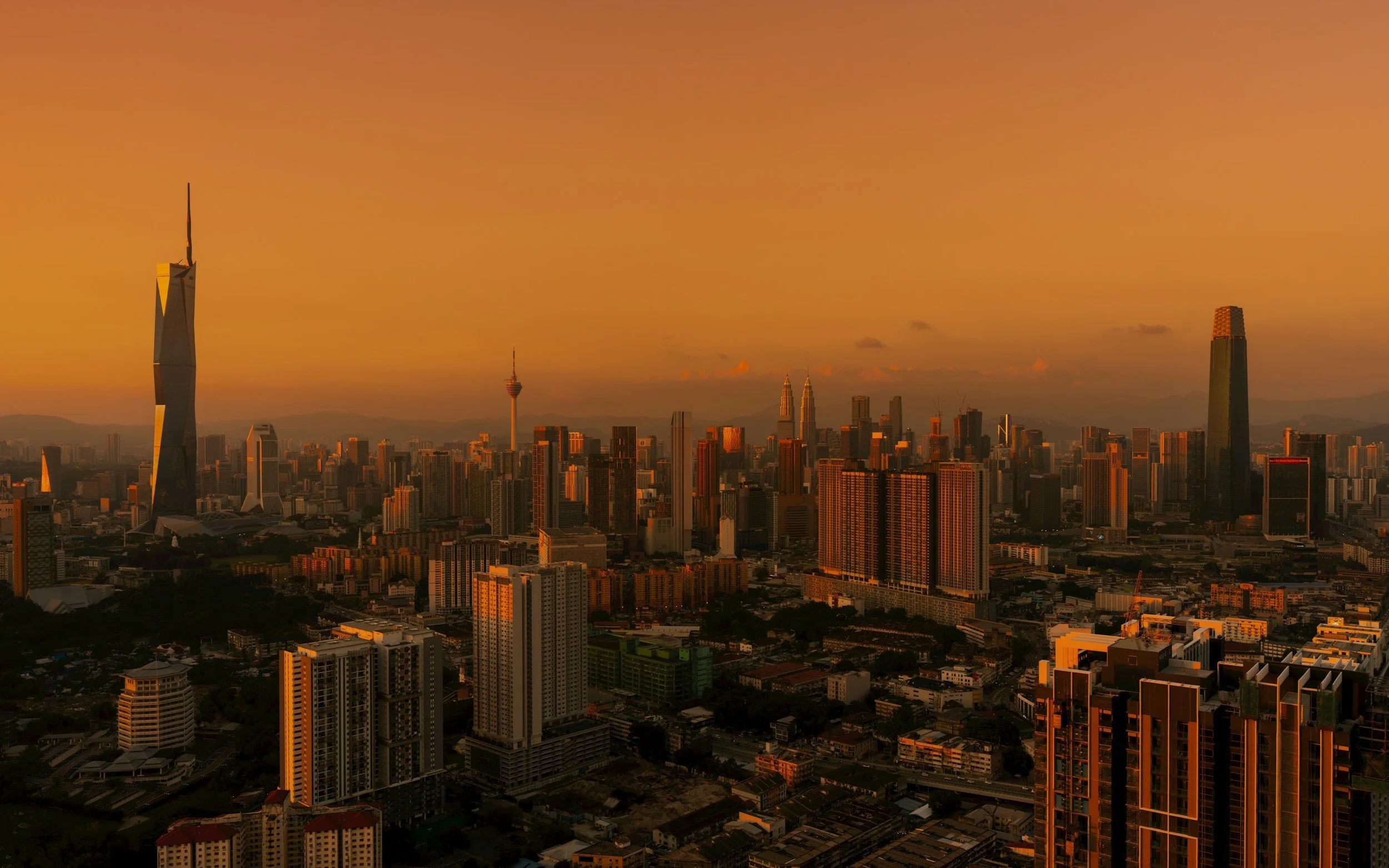
a hazy orange sky over a city skyline, the sun barely visible through wildfire smoke
Wildfire smoke is made up largely of PM2.5 — particulate matter so small it passes straight through lung tissue into your bloodstream. A fifteen-year California study of ER visits found migraine was the most common headache diagnosis showing up on high-smoke days, and the mechanism is what you'd expect: those particles trigger oxidative stress and inflammation, and inflammation is one of the levers that tips a sensitized nervous system into an attack. A separate NIH review of wildfire smoke's neurological effects found the same general pattern — headache, and even short-term dips in cognitive function, in the hours and days after exposure.
I'll be honest that the research specifically on migraine, versus tension-type headache, is a little messier than we'd prefer — the associations aren't uniformly strong across every study. But if your nervous system already runs close to threshold, you probably don't need a clean p-value to tell you what the last few days have felt like. Smoke is a heavy physiological load, and it's landing on top of heat, barometric shifts, and whatever else was already sitting on your shoulders.
One more thing worth knowing: this burden stacks across consecutive smoke days. Day 1 might be manageable. Day 4 of the same event often isn't, even at the same AQI reading, because your system hasn't had a chance to reset.
Is It Smoke Headache, Or Is It a Migraine?
Headaches and Migraines don't respond to the same things, and treating one like the other usually means you're not getting the most effective treatment.
Smoke-induced headache — the kind smoke gives almost anyone, migraine brain or not — tends to be bilateral, a dull pressure or band-like tightness rather than a throb, and it shows up alongside the other classic irritant symptoms: stinging eyes, scratchy throat, a cough, maybe a little congestion. It usually builds gradually while you're exposed and eases up within an hour or two of getting into clean air, hydrating, and letting your body recover. A standard OTC pain reliever generally does the job. There's no aura, no wave of nausea, no need for a dark room.
An actual migraine attack triggered by smoke looks different, even though smoke was the spark. It's more often one-sided, throbbing rather than pressing, and it comes with the rest of your migraine signature — light or sound sensitivity, nausea, aura if that's part of your pattern, the specific prodrome symptoms you already know from your own body. Critically, it doesn't reliably resolve just because you got the smoke out of your lungs. Fresh air helps, but it's not the whole intervention, because at that point you're not just dealing with an irritant anymore — you're dealing with a nervous system cascade that smoke happened to trigger.
The practical difference: if it's smoke headache, treat the irritation — clean air, hydration, rest, maybe an OTC analgesic. If it's a migraine, treat it like a migraine — your abortive medication if you take one, and your prodrome protocol if you catch it early: physiological sigh, ice at the base of the skull followed by heat on the shoulders, electrolytes, and blood sugar stabilization if you can tolerate food.
When you're not sure which one you're in, the light and sound sensitivity is usually the clearest tell. Smoke on its own doesn't typically make you want to lie down in a dark room. A migraine attack does.
Know Your Numbers
The highest-leverage thing you can do this week is stop guessing and start checking. You don't need a new app for this — most weather apps already build in air quality, and you probably have one on your phone right now.
AccuWeather and Weather Underground are two of the more reliable ones. AccuWeather's air quality data comes through a partnership with Plume Labs, a dedicated air-quality data provider, so it's not just a rough estimate bolted onto the weather forecast. Weather Underground pulls from a large network of weather stations for genuinely hyper-local conditions. Both include current AQI and a short forecast, right alongside the temperature you're already checking.
For the fire itself — where it is and how fast it's moving, not just the air quality it's producing — the Minnesota DNR's wildfire tools page is the best single hub. It links out to the DNR situation report, the Minnesota Incident Command System (MNICS) for large, actively managed fires, and InciWeb for an interactiv enational fire map. It’s worth checking once a day if you're anywhere near the affected areas, or just want to understand what you're actually breathing and why.
Pick your 1 or 2, and check them at set times. Refreshing an AQI app every twenty minutes is its own kind of vigilance, and vigilance has a cost — it's not free just because it feels productive.

Your Home
A HEPA air purifier, sized correctly for the room, is the best single investment here — an undersized unit in a big room is mostly for show. Swap your furnace filter to a MERV 13 during heavy smoke stretches, and replace it weekly rather than the usual monthly cadence, for as long as this lasts. Seal the house: windows and doors closed even when it's hot, and if you've got a window AC unit pulling in outside air, this is the week to skip it or run it on recirculate only.
If money's tight, a box fan with a MERV 13 filter clipped or taped to the intake side is a clever, low cost DIY option — it’s effective, and the one I'd tell you to build if a purifier isn't in the budget right now.
One thing people forget: the sealed house works against you if you're also burning candles or incense, using fragrance plug-ins, running a gas stove without ventilation, or vacuuming a lot during this stretch — all of those add particulate load indoors, right when you're trying to keep it out.
Pick one room, usually your bedroom, and make that your actual “clean” room if you can't purify the whole house. It doesn't have to be everywhere. It has to be somewhere.

an upscale matte black car interior
Your Car
Swap your cabin air filter on the same weekly cadence — most people don't know it exists, let alone that it needs changing. You can find a YouTube tutorial on how to swap your cabin air filters yourself at home. Type “yourmake yourmdoel year + air filter tutorial” in the search bar to find instructions for your vehicle. Set the ventilation to recirculate, not fresh air intake, especially in traffic. Keep an N95 (or a few) in the glovebox for gas stops and drive-thrus, anywhere the window has to come down. And keep a water bottle with you on your journeys.
Masks, Eyes, Kids, & Pets
A properly fitted N95 or KN95 is the one that actually filters particulate at this size — cloth and surgical masks won't do it. Fit matters more than brand: press it to your face and exhale hard. If air's escaping around the edges instead of through the mask, it's not sealed.
If you wear contacts, switch to glasses for the next few days if you can. Smoke is rough on eyes generally, and contacts make it worse. And a quick note on kids: N95s don't seal well on small faces, so for younger kids and your pets, the more realistic strategy is limiting outdoor time rather than counting on the mask to do the work.
If You Work Outside
I see you, and I know "just stay inside" isn't always on the table.
N95, non-negotiable, on maroon and purple AQI days. If you have any control over scheduling, front-load the hardest physical work to early morning, before smoke and heat both peak. Build in real breaks in filtered air — even ten minutes counts. Hydrate harder than feels necessary; heat and smoke together dehydrate fast, and dehydration is its own migraine trigger stacking right on top of the smoke load. And if you need to ask for a mask, more breaks, or a schedule shift — that's not you being “needy” or dramatic. That's an appropriate response to a hazardous air day.
If You Work Inside
Don't assume you're in the clear. Smoke gets into buildings, especially older ones, and especially anywhere the HVAC pulls in fresh outside air instead of filtering and recirculating.
A small HEPA purifier at your desk is worth more than you'd think, even in a building that seems "safe." Ask facilities whether your HVAC intake is pulling outside air right now — a lot of people are surprised to find out theirs is. And if your job is portable and your local AQI is in the hazardous range, working from home for a day or two isn't overreacting. It's a reasonable response to conditions that are, by the state's own classification, hazardous.
Move Your Workout Indoors
If you've got a run, a bike ride, or an outdoor class planned, move it inside on maroon and purple AQI days. Exertion means deeper, faster breathing, which means pulling in more smoke, not less — the opposite of what you want on a hazardous air day. This is one of the easier swaps on this list and one of the most commonly overlooked, because "avoid outdoor exposure" doesn't always register as "and that includes your workout." This is a great day to go to a studio yoga or pilates class, or even swap it for an at home YouTube workout from your favorite creator.
A Few More Things Worth Knowing
Refill your abortive migraine medication before you're mid-event, not during one — a multi-day smoke stretch is exactly the kind of week you don't want to discover you're down to your last dose.
If you've got any respiratory sensitivity, or you're just someone who likes actual data instead of guessing how you feel, a simple finger-clip pulse oximeter is a cheap, worthwhile thing to have in the house right now. They run $15–25, and they let you check your blood oxygen saturation in about ten seconds — useful on a smoke-heavy day if you're feeling short of breath and want to know whether it's anxiety, migraine-related, or something that actually needs medical attention. Normal is generally 95% and above; if you're consistently reading lower than that, especially alongside symptoms, that's worth a call to your doctor rather than a wait-and-see.
If you develop chest pain, real trouble breathing, or any other signs of a stroke, that's a 911 call, full stop. Go to Urgent Care or the ER, have a friend or an Uber drop you off. Smoke can mimic or mask something more serious, and this isn't the week to wait it out and see.
If you've noticed your migraines ticking up this week and you're not totally sure why, that's worth paying attention to, not just pushing through. That's exactly why I built the "Oh Sheet" Migraine Emergency Kit — 5 interventions you can reach for the moment you feel an attack starting, whether that's prodrome symptoms or the first real twinge. Used early enough, they can shorten an attack, take the edge off its intensity, or head it off before it fully takes hold.
On a week when smoke is already stacking the odds against you, having something ready to grab at the first sign matters more than usual.
What You Can't Control (And What You Can)

a person seated near a window, eyes closed, hands resting calmly, soft hazy light filtering in
a person seated near a window, eyes closed, hands resting calmly, soft hazy light filtering in
Here's a quick explanation on Threshold Theory for Migraine, because I don't want to leave you with a task list and no context.
You can’t control the air quality. No amount of nervous system regulation, no supplement, nothing in this post is going to make hazardous PM2.5 safe to breathe. The wellness world has a bad habit of implying that if you just regulate hard enough, the outside world stops mattering. It doesn't. Smoke is a real stressor, and the right response to a real load is the practical stuff above — purifiers, masks, filters, checking the AQI numbers instead of guessing.
Threshold Theory doens’t give you control over the smoke. It gives you control over the other factors that you can control — sleep, hydration, blood sugar, the physiological sigh before your feet hit the floor in the morning. None of that cancels out the smoke. But it does keep the rest of your container from filling up too, so the smoke isn't the one thing that tips you over into an attack.
This is the leverage available to you right now — not eliminating a trigger you can't touch, but making sure it's not adding to a nervous system that's already maxed out on top of everything else.
Air Quality Events like this one pass. The cold front forecasted for later this week should help clear things out, and while there will absolutely be another smoke event at some point, this particular stretch has an end point. If you know someone elderly, pregnant, or dealing with heart or lung issues, a quick check-in this week goes a long way — this is a hard week for a lot of people, not just the migraine-prone.
If this week has made it clear your threshold is lower than you'd like, and you want help mapping what's actually filling your container so you're more resilient the next time this happens — because there will be a next time — that's the work we do in the Migraine Resilience Academy. Six weeks, a small cohort, a framework built for exactly this kind of layered, real-life load.
Stay inside where you can this week. Run your filters. Check your numbers once, not twelve times. And go easy on your nervous system — it's carrying a lot right now that has nothing to do with willpower.
— Dr. Brenna Erickson DC, The Migraine Whisperer

The Migraine Whisperer is Dr. Brenna Erickson's practice focused on helping people with chronic and complex migraine build the conditions for real, lasting neurological resilience. She practices at Stockheart Whole Health in Minneapolis and works with clients online through the Migraine Resilience Academy.
SHARE THIS POST:
💚 Know someone in Minnesota — or anywhere else dealing with smoke right now — who gets migraines? Send them this.
📌 Save it. The tool list is worth having on hand for the next smoke event, and there will be a next one.
💬 Leave a comment: which one are you adding first — the filter swap, the mask, or the clean room?
