
Naming It: How to Tell If What You Have Is Migraine
By Dr. Brenna Erickson, DC ┃ The Migraine Whisperer
📖 Reading Time: 17 minutes
IN THIS POST:
If you've ever canceled plans because of a headache that came with a side of nausea and the sudden, urgent need for total darkness — or spent a full day dizzy and foggy and strangely unable to find your words, with no headache at all — or lost a day to feeling wrung out and unlike yourself for reasons you couldn't explain — I wrote this is for you.
There's a strong chance you've been living with migraine for years without anyone ever giving it that name. It doesn’t make you weaker, or “being dramatic” like somone might have labelled you. That isn’t yours to carry anymore.
What Is Actually Happening
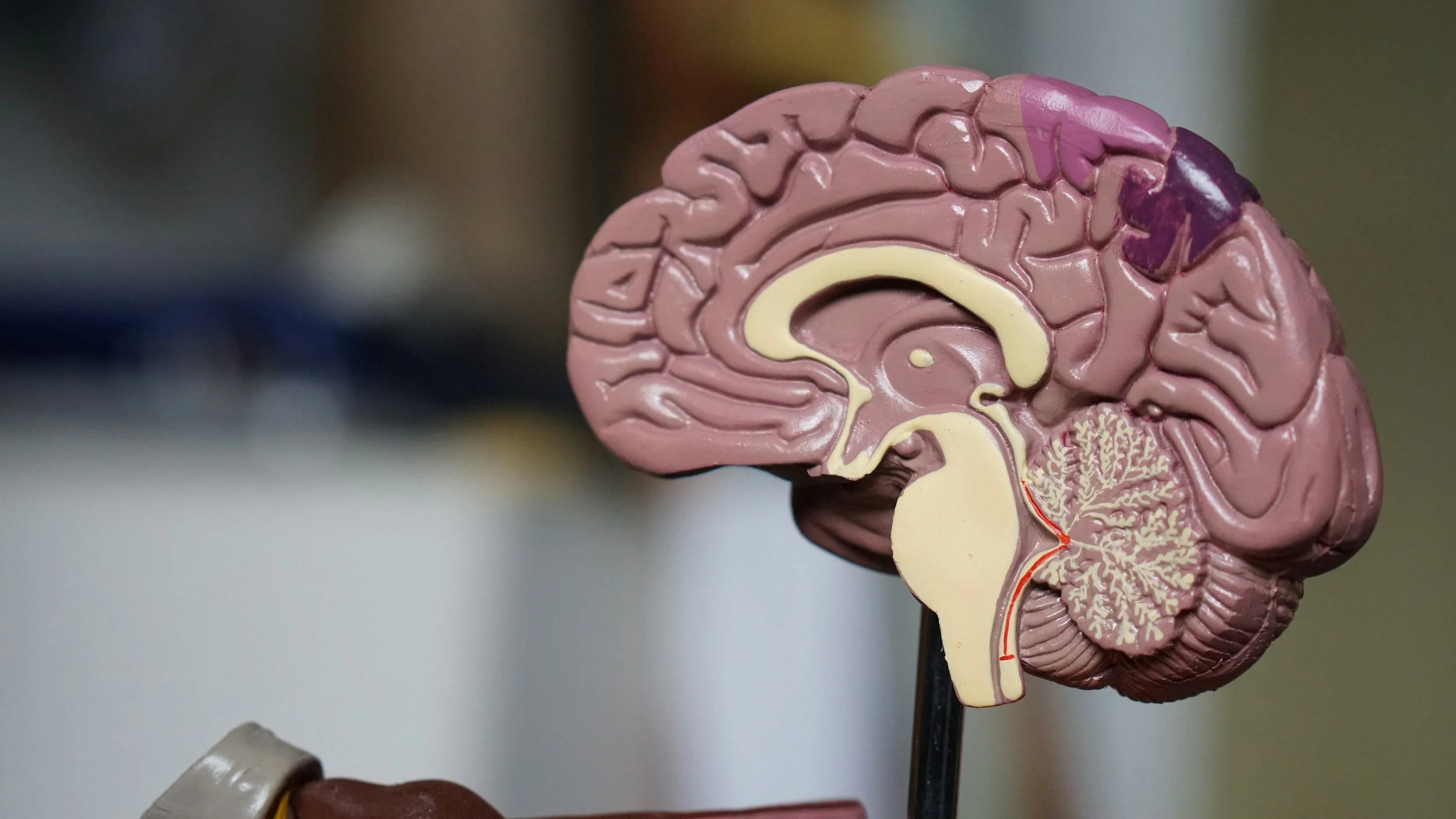
a classroom model of a brain, split in half
Migraine isn't a headache that got out of hand. It's a neurological event — brain, blood vessels, and nervous system all responding together — and the headache, when it shows up, is just one part of that event.
It's also genetic, at least in part — but genetics here works more like a loaded gun than a lightning strike. If a parent has migraine, the likelihood of their children carrying that same predisposition rises meaningfully. It isn't a single gene you either carry or don't; it's polygenic, a whole cluster of genes that together shape how reactive your nervous system is wired to be. Carrying that genetic predisposition doesn't guarantee attacks. Plenty of people carry the same wiring and rarely, if ever, have a migraine. What seems to matter enormously is everything sitting on top of the genes — sleep, stress load, hormonal stability, blood sugar regulation, nervous system resilience, overall brain health. Genetics may load the gun. Daily life decides how often, and how hard, it gets fired. Hold onto that idea, because it threads through the rest of this piece: migraine is genetically influenced, but it isn't genetically fixed.
That reactivity is the starting point. Between attacks, a migraine brain tends to register ordinary sensory input — light, sound, smell, even shifts in barometric pressure — more intensely than a non-migraine brain does. This is a physiological difference in how the nervous system fires and resets, not a personality trait.
For those who experience aura, and about 30% of people with migraine do — a slow wave of electrical activity moves across the surface of the brain at roughly 2 to 3 mm a minute. This temporarily alters the function in whatever region it passes through. Moving through the visual cortex, it produces shimmering lines or blind spots. Moving through areas governing language or sensation, it can produce tingling sensations or a sudden loss for words. Aura symptoms often spread from one place to the next because that's exactly what the underlying wave is doing, internally.
As this activity moves through brain regions, it activates the trigeminal nerve — the nerve responsible for sensation in the face — which in turn releases inflammatory molecules around the blood vessels covering the brain. Those vessels become inflamed and hypersensitive, and that inflammation is the actual source of migraine pain, which is part of why it so often throbs in time with the pulse.
One molecule in particular, CGRP (calcitonin gene-related peptide), drives a large share of that inflammatory cascade — significant enough that an entire newer class of migraine medications exists specifically to block it.
With repeated attacks, the nervous system's pain-processing pathways can become progressively more sensitive over time, a process called central sensitization. This is part of why untreated, frequent migraine tends to worsen rather than stay the same, and why some people develop allodynia — pain from things that shouldn't hurt at all, like the scalp aching under a ponytail during an attack. The encouraging flip side: a nervous system given consistent support tends to become less reactive over time. Sensitization runs in both directions.
Migraine is a coordinated, traceable neurological process — not "just a bad headache.”
How It Feels
Migraine isn't one experience with a dial that runs from mild to severe. It's a spectrum of distinct presentations, and many of the most common ones don't look anything like you are imagining.
The classic pattern:
Throbbing, often one-sided pain, though plenty of migraine shows up on both sides at once
Nausea, or sensitivity to light, sound, and smell severe enough to send you looking for a dark, quiet room
Pain that worsens with ordinary movement — climbing stairs, bending over
The ones people miss entirely:
Silent migraine — every phase, all the disruption, and no headache
Vestibular migraine — dizziness or vertigo as the main event, with head pain playing a minor role or none
Hemiplegic migraine — temporary weakness on one side of the body, rare and alarming enough to sometimes be mistaken for stroke
Migraine with brainstem aura — symptoms like slurred speech, ringing in the ears, double vision, or unsteadiness, arising from the brainstem rather than the cerebral cortex
Retinal migraine — temporary vision loss or disturbance in one eye only, distinct from the more common visual aura, which typically affects both eyes
Abdominal migraine — recurring episodes of stomach pain, nausea, and vomiting with little or no head pain, most often seen in children, but not exclusively
Menstrual migraine — attacks tied closely to hormonal shifts in the cycle, often more severe and harder to treat than migraine at other times of the month
Chronic vs. episodic — a frequency distinction (fifteen or more headache days a month for chronic, fewer for episodic) that shapes both diagnosis and treatment
The phase most people have felt but didn’t have the name:
Hours to a full day before the head pain, the body is often already signaling what's coming — sudden cravings for salt, chocolate, or carbohydrates that seem to appear from nowhere; yawning so persistent that people ask if you're bored; becoming uncharacteristically short-tempered for no clear reason; neck stiffness; a puffiness or heaviness; a specific "something is off" feeling many people learn to recognize without ever naming it. This is prodrome, and it's one of the most commonly missed phases of migraine — plenty of people quietly blame themselves for a mood or a clumsy day that was never a mood at all.
After the pain resolves, many people move into postdrome — the "migraine hangover" — fatigue, brain fog, and a depleted, fragile feeling that can last a full day after the headache itself is gone.
If none of the classic descriptions have ever quite matched your experience, that isn't evidence you don't have migraine. It may simply mean you've been living one of its quieter forms all along.
When It Shows Up In Childhood

a firefighter sprays fire retardant onto a car engulfed in flames
Migraine in children often looks nothing like migraine in adults, which is a large part of why it goes unrecognized for so long. Attacks tend to be shorter, pain is more often on both sides of the head rather than one, and abdominal migraine — recurring stomach pain and nausea with little or no headache — is far more common in kids than most parents or pediatricians expect. Cyclic vomiting syndrome, recurring episodes of severe vomiting with no clear illness behind them, is now understood to be closely related to migraine in many children. Motion sickness that's earlier and more intense than what other kids experience can also be an early marker. If a child has a family history of migraine alongside a pattern of unexplained stomachaches, vomiting spells, or motion sickness, that combination deserves a direct mention to their pediatrician, by name.
Threshold Not Triggers

a glass of water overflows in a bubbling torrent of wate from above.
Here's a reframe for you: migraine is rarely caused by one single trigger. It happens when cumulative load — poor sleep, stress, skipped meals, hormonal shifts, dehydration, sensory overload, all stacking together — crosses a threshold your nervous system can no longer absorb.
This is the practical, day-to-day version of the genetics topic from earlier. The genes set the wiring, but the threshold is where lifestyle and brain health actually make a meaningful difference in your experience — every bit of sleep, nervous system regulation, and stability you build raises how much load your system can absorb before it becomes overwhelmed and triggers an attack. This is also the idea this whole blog, and the Migraine Resilience Academy, are built around.
The same food can be eaten on 10 ordinary days and only provoke an attack on the 11th — not because it was randomly guilty that day, but because on day 11, it happened to be the final addition to a “bucket” that was already nearly full from everything else going on. Chasing "The Trigger" tends to send people down an exhausting road of eliminating things that were never really a problem in isolation. Raising the threshold itself — building more room before it overflows — is a fundamentally different project, and usually the more effective one.
One myth deserves retiring here too: pointing to an obvious stressful event doesn't rule migraine out. Stress is one of the most common contributors to that cumulative load there is. Having an explanation for why your capacity was exceeded doesn't mean it wasn't a migraine event.
Getting a Diagnosis

a doctor in white coat with a stethescop writes on a clipboard, a patient’s hands are folded on the desk across from them.
This is the part almost no one explains ahead of time, and where a lot of avoidable frustration lives.
There's no blood test or scan that confirms a migraine diagnosis. Diagnosis is clinical — your provider matches your symptom pattern against established diagnostic criteria.
The basics are 3 simple questions:
1) Has your headache limited your acitivites for a day or more in the last 3 months?
2) Are you nauseated or sick to your stomach when you have a headache?
3) Does light bother you when you have a headache?
Answering “yes” to 2 out of 3 of these questions means there is a 93% chance you are exeriencing migraine.
Answering “yes” to all 3 means there’s at least a 98% you have migraine.
There’s an article that goes more in depth on this topic here.
The interview itself is the primary diagnostic tool, not a formality on the way to some more "real" test. A thorough provider will ask how often attacks happen, how long they last, what the pain feels like, what makes it better or worse, and what accompanies it. A neurological exam — reflexes, coordination, strength, eye movements — is standard, and it exists to rule out anything more serious, not to confirm migraine itself.
A few presentations get taken especially seriously, and it helps to know why so they don't feel alarming if they come up: a sudden "worst headache of my life," fever with a stiff neck, new neurological symptoms appearing after age fifty, or head pain following an injury. None of these fit a typical migraine pattern, which is exactly why they prompt closer attention.
If imaging is ordered, it's most often to rule other things out rather than to confirm anything. An MRI may be paired with a vascular study — an MRA, looking specifically at the blood vessels for concerns like aneurysm or malformation — while a CT is more likely in an urgent setting to quickly rule out bleeding. If imaging does come back mentioning a few small white matter spots, take that as reassurance rather than alarm: this shows up more often in migraine brains, particularly with aura, and on its own is not a sign of a larger problem. Think of it as a passenger along for the ride, not the driver.
Bringing your own data changes what a single visit can accomplish. A few weeks of tracking with an app like Migraine Buddy — attacks, phases, sleep, cycle timing — is often more useful to a provider than reconstructing months of history from memory in the waiting room. A completed MIDAS questionnaire (the Migraine Disability Assessment, free to print right here) gives a fast, standardized picture of how much migraine has actually cost you in missed work, missed plans, and lost function over the past three months — information that shapes how seriously and how quickly a provider treats it.
One appointment is often the beginning of the process rather than the end of it. "Let's try this and reassess" is a normal, reasonable plan — migraine care tends to be iterative, more trial-and-adjust than one-and-done.
If you're waiting on that first appointment, it's worth having something on hand for the attacks that show up in the meantime — this is exactly what I designed the "Oh Sheet" Migraine Emergency Kit is built for.
Who To Bring This To
There's no single correct answer here — it depends on what you're after.
Primary care providers and GPs are the right first stop for most people, especially when medication is part of the plan. A GP can diagnose migraine, start first-line abortive and preventive medications, and refer you onward to a specialist if your case is complex or isn't responding.
Functional medicine practitioners are best understood as an approach rather than a single license — a functional medicine provider might be an MD, DO, NP, or a DC or ND with additional functional medicine training. What defines the approach is the process: a systems-wide workup looking at hormones, gut health, inflammation, mitochondrial function, nutrient status, and stress physiology, aimed at identifying what's actually driving your particular pattern rather than only naming the diagnosis. It's usually a slower, more investigative process than a standard primary care visit, meant to complement medical care rather than substitute for the diagnostic and medication side of it.
Neurologists and headache specialists are the right move for frequent, complex, or treatment-resistant migraine. This is where you'd go for CGRP therapies, Botox for chronic migraine, or a more specialized diagnostic eye — distinguishing migraine with aura from a more concerning neurological event, for example.
Gentle DCs, especially those trained in functional neurology approaches, work through the nervous system directly rather than through medication or biochemistry — assessing and retraining how the brain and nervous system process and regulate input. It's a nonpharmacological approach best suited to migraine with a strong nervous-system-sensitivity or cervicogenic pattern, typically used alongside medical care rather than as a substitute for diagnosis.
DOs complete the same medical training as an MD and can diagnose and prescribe the same range of migraine medications, with osteopathic manipulative treatment (OMT) as an added hands-on tool. That combination can matter specifically when a musculoskeletal or cervicogenic piece is tangled into your migraine pattern.
NDs (naturopathic doctors) share a lot of philosophical overlap with functional medicine — nutrition, botanicals, lifestyle, root-cause investigation — but are a distinct licensed profession with their own scope of practice, which varies by state. Where licensed with prescribing authority, some NDs can also manage certain medications; where they can't, they typically coordinate with a prescribing provider.
NPs are increasingly a primary point of contact for migraine care, with prescribing authority and the ability to diagnose and manage first-line treatment much like a GP can, often with more visit time available for the kind of detailed symptom history migraine diagnosis depends on.
None of these is the objectively correct choice. They're different approaches built for different parts of the problem, and plenty of people end up using more than one at the same time — a neurologist for medication, a functional medicine provider or DC for the root-cause and daily-management piece.
Medication and Root Cause, Together

halved citrus fuits displayed with medication capsules
This gets framed as a choice between two philosophies more often than it should be. It's really two different jobs.
Pharmacological treatment works on the mechanism directly and quickly. Triptans can interrupt an attack already underway. CGRP medications block that central inflammatory molecule, either preventively or acutely. Preventives reduce how often attacks occur in the first place. When migraine is frequent, severe, or actively limiting your life, medication is often the fastest path to relief while everything else is being addressed.
Medication is a tool, not a verdict. For some people it's a short bridge, used while the underlying threshold work catches up. For others, it becomes a longer-term part of the picture — some nervous systems need that consistent support, the same way some people need glasses. Needing medication doesn't cancel out the modulation work; the two work together rather than compete.
Root-cause work goes after why the threshold sits where it does — hormones, sleep, nervous system regulation, blood sugar stability, nutrient status. It moves more slowly, but it's aimed at raising the threshold itself, and preventing, rather than only interrupting a migraine attack once its’ begun. It's the piece that actually changes how your particular genetic wiring gets expressed day to day. Done well, it can mean needing less medication (or even none) over time.
Plenty of people do both at once, and that's not a failure of either approach — medication controls the current fire while root-cause work reduces how often new ones start. The honest question isn't which philosophy wins; it's whether you need the fast-acting tool, the underlying-cause tool, or both, and that answer is allowed to change over time.
Building Your Care Team

a mixed gender group of young professionas collaborating on a project
Once you have a name for what's happening, the question shifts from what is this to who helps me live with it. It takes a village — migraine touches too many systems for any single provider to carry the whole thing — and what your particular village looks like depends on how your migraine presents, what's accessible to you, and what your budget allows. Nobody needs every person below at once, and a full care team built over a year looks very different from what's realistic in month one.
Matched to presentation:
Dizziness or vertigo-predominant → a vestibular-trained physical therapist or gentle chiropractor.
Hormonal pattern (menstrual, perimenopause) → an OB-GYN, or a functional medicine practitioner running full hormone panels
Neck, jaw, or TMJ involvement → a PT or DC with a cervicogenic/TMJ focus
Nervous system dysregulation → a therapist, ideally somatic or nervous-system-informed.
Gut or food-pattern involvement → a registered dietitian or functional medicine practitioner.
Connective tissue or hypermobility overlap → a PT or gentle DC experienced with hypermobile presentations.
The supportive layer, easy to overlook:
Mental health therapy — living with a chronic, unpredictable condition takes a toll on its own, separate from whatever else is driving your migraine. Therapy isn't reserved for the nervous-system-dysregulation presentation specifically; anxiety, grief, and the exhaustion of being dismissed by providers are all reasonable things to bring in on their own.
A personal trainer familiar with chronic conditions — movement matters for migraine, but building a sustainable practice around unpredictable good and bad days is its own skill, and a trainer who won't push you through a flare is worth more than a generic program and building strenth around your upper back, and nek can improve migraine symptoms that are triggers by poor posture or sedentary work.
Massage therapy — a legitimate tool for nervous system regulation and the neck and shoulder tension that so often tangles up with migraine, not a luxury add-on.
Community and peer support — a support group, an online community, even one person who gets it without needing an explanation. This layer is free, and its impact is easy to underrate.
A health coach — a diagnosis and a prescription mark a starting point, not an ending. The daily work of living with it between appointments — understanding your own patterns and translating what every other provider on this list recommends into something sustainable — is where a lot of capable people quietly get stuck. A health coach is who helps integrate all of the pieces.
None of this needs to be assembled all at once, and none of it needs to be expensive to matter. A full team might be a neurologist, a functional medicine provider, and a therapist. It might just as easily be a GP, a supportive friend group, and a consistent walking habit. The right team is whichever one actually fits your life — not the longest possible list.
What I Want You To Hear
You don't have to keep white-knuckling your way through days you don't have language for.
You don't have to accept that this is simply what your body does, or that your only choices are to suffer through it or medicate it into silence.
And you didn't simply lose a genetic lottery with no say in the outcome. Your genes set the starting point — they don't have the final word. How migraine shows up in your actual life is shaped enormously by sleep, stress, hormones, and nervous system health, all of which can be worked with. Your nervous system isn't malfunctioning at random; it's doing something specific and traceable, and once it's named and understood, it becomes much easier to influence. Migraine, in nearly all its forms, responds to understanding and care.
If any of this sounds like your own experience and you haven't had it named yet, the next step isn't a supplement or an elimination diet. It's a conversation with a provider, and now you have the tools and language to make it a good one. And if you already have the name and are looking for the daily support that turns a diagnosis into an actual, livable pattern, that's exactly what the Migraine Resilience Academy is built for — six weeks, a small cohort, and a framework for building the daily conditions your nervous system needs.
The Migraine Whisperer offers migraine education and coaching grounded in the nervous system, hormones, and daily lived experience of migraine. We work alongside your existing medical care, not in place of it.

A note from Dr. Brenna:
I wrote this because I've sat across from too many patients who spent years being told their symptoms didn't add up to anything — dismissed, minimized, or quietly convinced they were the problem. They weren't. Their migraine just didn't look like the picture we've all been handed.
If this is the first time you've seen your own experience described accurately, I hope it feels like relief rather than one more thing to manage alone. Naming it is the first step, not the whole of the work — but it's the step that makes the rest of it possible.
— Dr. Brenna Erickson, DC
SHARE THIS POST:
💚 Know someone who's spent years being told their symptoms don't add up to anything? Send them this.
📌 Save it. This is a good one to come back to before your next appointment.
💬 Leave a comment: which subtype description hit closest to home?
